She grew up a Jewish girl in a religious Baghdad household, a home that
already carried a story: her father had grown up fatherless, his own father lost to a war,
his mother left to raise four children alone. Baghdad, in her telling, begins not with
danger but with safety: sleeping in the same house with Arab neighbors,
and on brutal summer nights carrying bedding up to the flat roof to sleep under the open
sky; whole neighborhoods, Jewish and Muslim households alike, sharing the same starlit
rooftop landscape. That memory, she said, felt safe.
There were outings to the Tigris, to al jazra, a river island or sandbank,
with songs, and fish cooked beside the water, the world of masgouf. Food is everywhere
in her memory: everything fresh ("organic," she said, translating her childhood into
modern vocabulary), lettuce she called chassa, a soft flour dish whose name is
lost, and a drink after meals she called maza. Shabbat had its rules (her
father wouldn't comb his hair, for combing can pull out hairs) but it also had its
freedoms: long walks through the city.
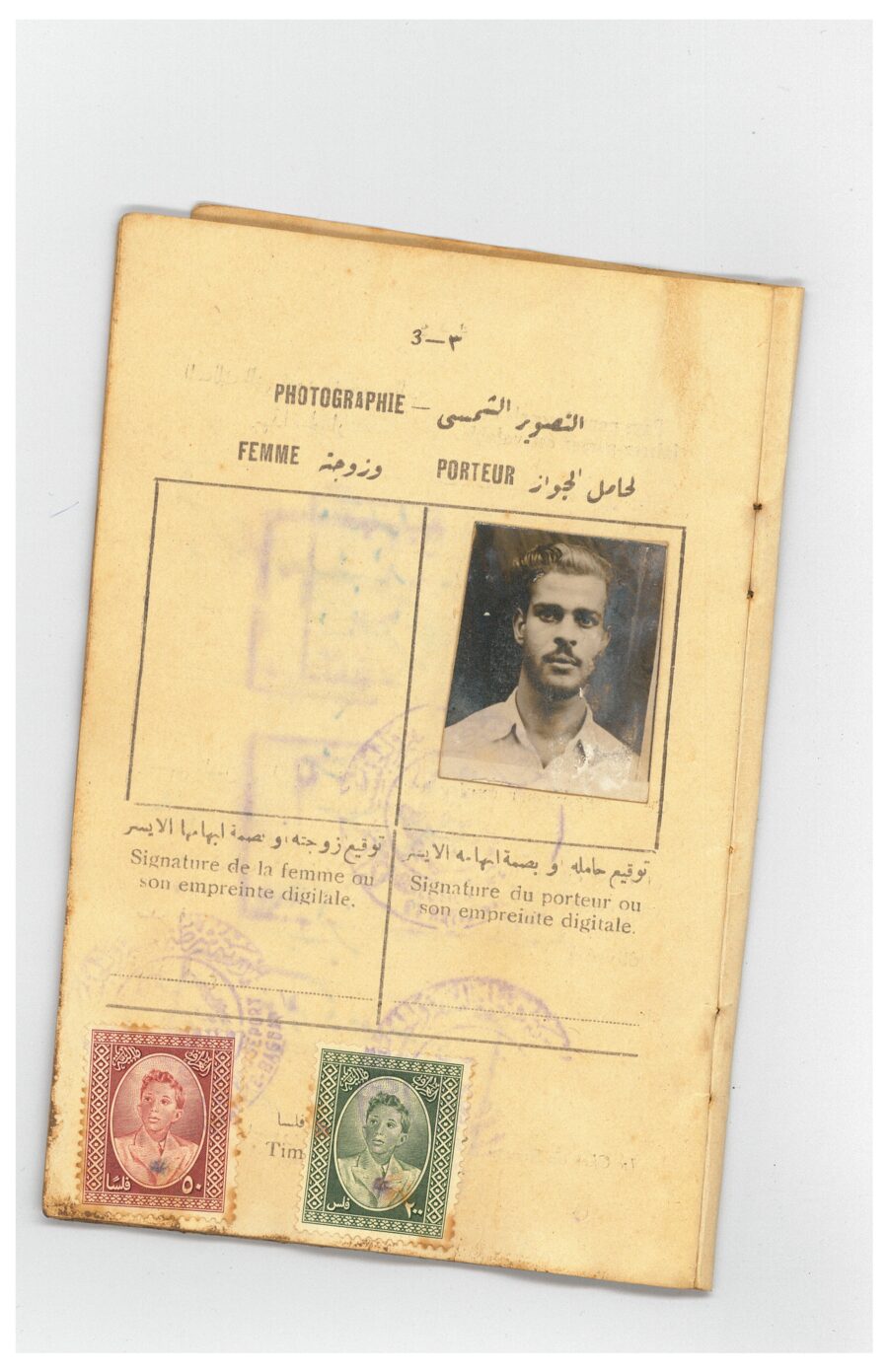
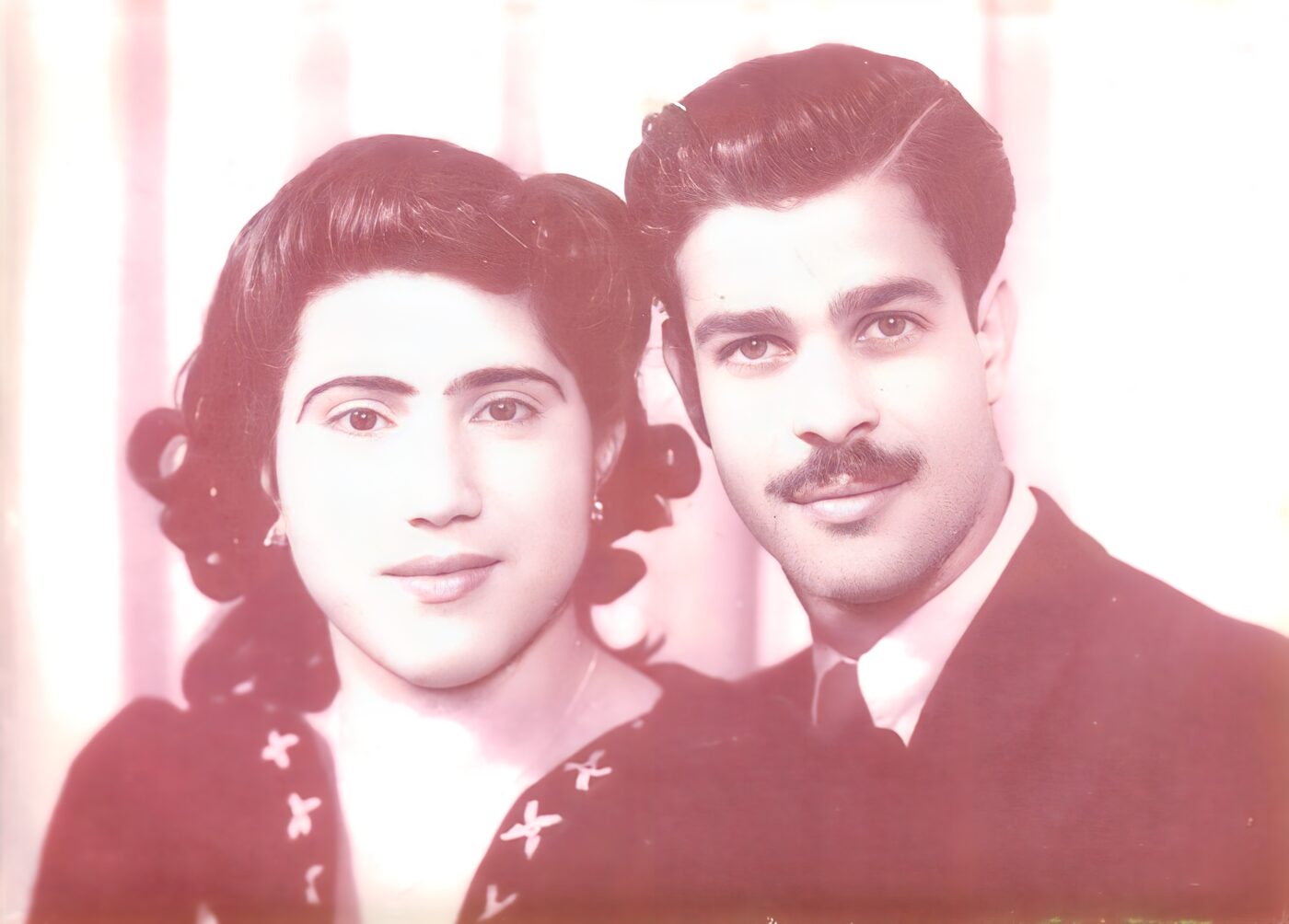
Walking mattered. The young man who would become Saba liked to walk
Baghdad: Karrada, Bataween, the cosmopolitan quarters where Jews, Muslims, and
Christians lived side by side. She was a teenager in a city she knew by foot.
Then the atmosphere changed. Arabs attacked, stealing and killing children, and fear
entered the family's calculations: they stopped wanting her to travel to school,
"even though it wasn't really" dangerous, she said, distinguishing to the end
between the danger and the fear of it. Her passport says she was born in Baghdad in
1935, which means the attacks she remembered were seen through the
eyes of a girl of about six: the Farhud of 1941 as a child experienced it. At
seventeen she left Baghdad, and worked two or three years alongside
Saba as their life together began.
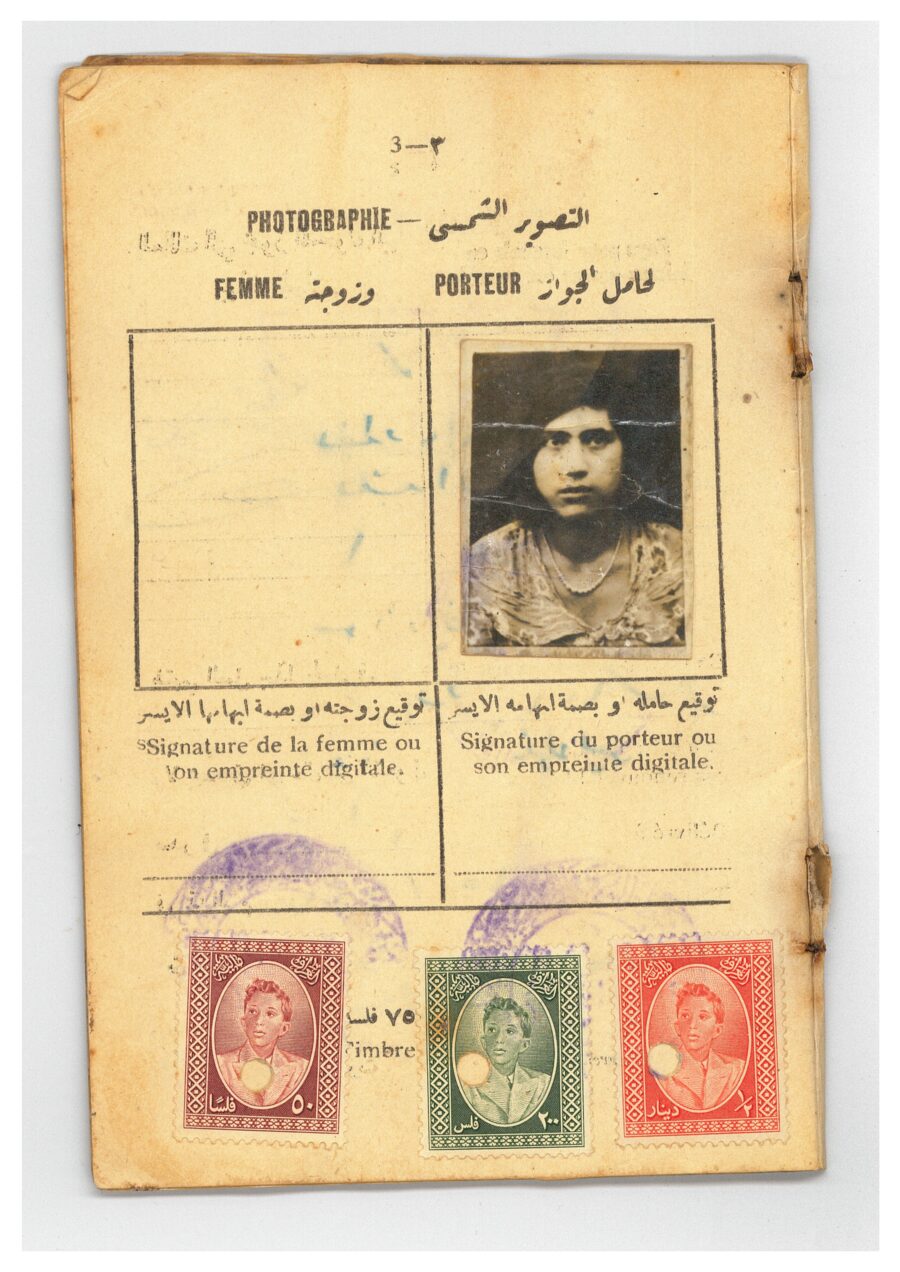
The paper agrees with her. Her passport's description page records the girl the clerk
saw: one metre sixty-five, black hair, dark eyes, and, in blue ink under
signes particuliers, a beauty mark on her left cheek. On a visa page an oval
Ottoman Bank cachet reads granted, 1950: the exit paperwork of the great
departure. The airlift ran into 1952; leave then, and she was sixteen or seventeen.
The notes said seventeen.
Her grandmother, widowed by a war and left to raise four children alone, had
blessed her to have seven children; she had seven. The notes jump decades and land
somewhere ordinary: Savta, mother of seven, with teenagers at home, working in a
restaurant at a gas station.
The passport anchors what the notes could only estimate: born 1935, a
child of about six during the Farhud, gone with the exodus at sixteen or seventeen.
The handwritten year is our best reading of the clerk's hand; the notes are preserved
as she spoke them, and the uncertain words are kept uncertain on purpose.
From the notes
"sleeping in same house with arabs, sleeping on the roof, feeling safe"
Flat-roofed Baghdad houses; families slept on rooftops through the summer heat. Her strongest childhood memory of Baghdad is one of safety.
From the notes
"al jazra: river sand dune songs, cooking fish"
The Tigris sandbank islands that surfaced each summer; Sasson Somekh's memoir describes the same nights: rowboats, bonfires, masgouf staked around the fire. Her uncertain word, corroborated by a witness (see the memoir section).
From the notes
"he liked to walk around in bagdhad, karada, bataween"
Saba, as a young man: courtship on foot through Baghdad's mixed, cosmopolitan quarters.
From the notes
"family didn't want savta to go to school, thought it was a dangerous travel, even though it wasn't really"
How communal violence changes a life even without touching it directly: the history isn't only "people were killed"; it's "my parents stopped letting me go to school."
From the notes
"she left baghdad at age 17"
Her passport bears this out: born Baghdad 1935, exit paperwork stamped 1950, airlift running into 1952: sixteen or seventeen at departure. The one fact that anchored the whole chronology, and it held.